
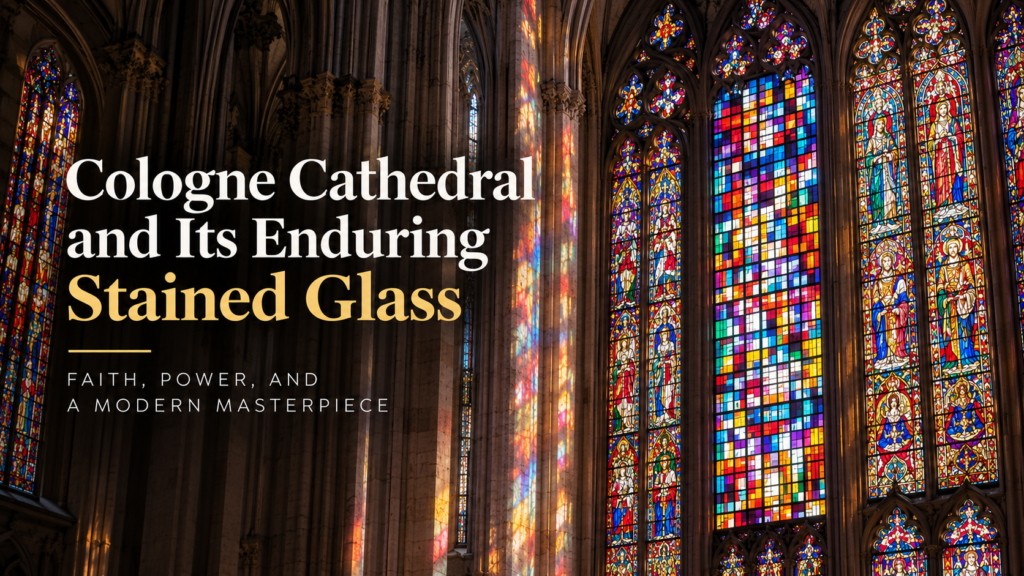
Workers started Cologne Cathedral in 1248 after fire destroyed an earlier church on the site. The project stalled for centuries and crews only finished the towers in 1880, over 600 years later. Allied bombing badly damaged the cathedral in 1944, but workers had already removed the medieval glass for safekeeping, so much of the oldest stained glass survived the war intact. One window did not survive, and its 2007 replacement turned Cologne into one of the only cathedrals on earth where medieval tradition and contemporary art hang side by side in glass.
The Significance of the Stained Glass Windows
Most cathedrals build their glass around a single era and style. Cologne does the opposite, and that mix is exactly what makes it worth studying. Thirteenth-century windows sit near nineteenth-century royal donations, which sit near a 2007 window built from abstract color squares. Each era used stained glass to make a different statement: medieval craftsmen taught scripture, nineteenth-century donors displayed political power, and a modern artist asked whether color alone, with no figures at all, could still carry sacred meaning.
Three Windows That Define the Cathedral
1. The Richter Window (South Transept)
Allied bombs destroyed the original south transept window in World War II, and workers installed plain glass in its place for decades. In 2007, the cathedral finally replaced it, and chose German painter Gerhard Richter to design the new window. Cathedral leaders originally wanted a figurative scene of twentieth-century Catholic martyrs. Richter declined and proposed something radically different instead: 11,500 hand-blown glass squares in 72 colors, arranged by a computer program to avoid any deliberate pattern. The result fills a 65-foot-high opening with shifting, kaleidoscopic light that changes with the weather outside. Cologne’s cardinal at the time refused to attend the unveiling, calling the design better suited to a mosque than a cathedral. Many visitors today consider it one of the building’s most striking features.
2. The Bavarian Windows (North Aisle)
King Ludwig I of Bavaria donated these windows in the mid-1800s, during a wave of romantic enthusiasm for medieval art and architecture. The windows depict saints and biblical rulers in rich reds and golds, styled to evoke the Gothic windows of centuries earlier. In an odd historical twist, Ludwig I lost his throne during the 1848 revolutions the same year workers finished installing his gift to the cathedral. The windows now stand as a reminder that stained glass has always carried political weight alongside its religious message.
3. The Medieval Bible Windows (Clerestory)
High in the choir, Cologne’s oldest surviving glass dates back to the thirteenth century, not long after construction began. These windows illustrate biblical scenes in the bold, saturated style typical of early Gothic glasswork, with thick lead lines separating each figure. Workers carefully removed these panels before the bombing raids of World War II, which is the only reason they still exist today. Standing beneath them, visitors look at glass that predates the cathedral’s own towers by over 600 years.
The Craftsmanship and Design
Richter based his window on an earlier painting of his called 4,096 Colors, which he had created decades before the cathedral commission. He chose 72 of the painting’s colors specifically because they already appeared somewhere else in the cathedral’s existing windows, tying his modern design back to centuries of tradition. Glass studio Derix hand-blew each of the 11,500 squares and fitted them into the cathedral’s original Gothic stone tracery, so old architecture and new art share the same frame. The medieval windows nearby rely on an entirely different method, with painted details fired onto the glass and assembled scene by scene rather than left to algorithmic chance.
A Testament to Faith and Art
Cologne Cathedral became a UNESCO World Heritage Site in 1996, recognized for both its scale and its layered history. Its windows refuse to settle on one answer about what sacred art should look like. Thirteenth-century craftsmen painted saints by hand. A nineteenth-century king used glass to project power. A twentieth-century artist let a computer scatter color into something that still somehow feels holy. Cologne’s cardinal thought Richter’s window didn’t belong in a church. Six centuries of changing stained glass suggest the cathedral has always had room for one more idea about what faith can look like in light.