
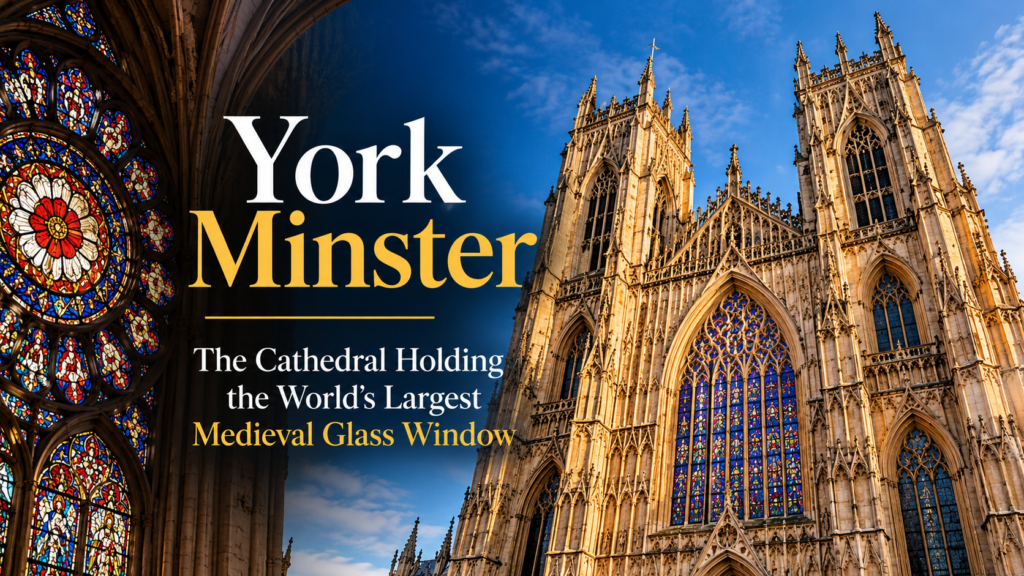
The York Minster stained glass rises above the city of York in northern England. Builders started the current Gothic church in the 1220s and finished it in 1472. It holds more medieval stained glass than any other cathedral in Britain. The collection includes 128 windows and an estimated two million pieces of glass. One window alone is bigger than a tennis court. Visitors who step inside often stop in the doorway and stare. The light does that to people.
The Significance of the Stained Glass Windows
York’s glass spans nearly 900 years. Some panels date back to the twelfth century. Medieval craftsmen designed them to teach the Bible to people who could not read. Each window works like a page in a giant picture book. Together, they cover the whole story of faith, from creation to the end of time. Visitors can still read that story today. York protected its glass through wars, fires, and centuries of weather. Few cathedrals in Europe can say the same.
Three Windows That Define the Minster
1. The Great East Window (Behind the High Altar)
Master glazier John Thornton of Coventry created this window between 1405 and 1408. It holds the largest expanse of medieval stained glass in the world. The panels tell the story of the universe in order. The story starts with Genesis at the top. It ends with the Book of Revelation below. Hundreds of small scenes fill the space between. Angels, kings, and monsters crowd the panels. Each one rewards a closer look. Conservators removed all 311 panels for restoration. The project ran from 2008 to 2018. Today the window glows again, and visitors can see detail that went unseen for centuries.
2. The Five Sisters Window (North Transept)
Craftsmen built this window around 1250. Five tall lancets, each over 50 feet high, fill the north wall. The glass is not colorful like the Great East Window. Instead, it uses grisaille, a style of silver-gray glass with delicate painted patterns. The effect is calm and cool, like light through frost. Legend gives the window its name. Charles Dickens retold the story of five sisters who stitched a pattern, and the glaziers copied it in glass. The window now honors the women who died in the two World Wars. Many visitors sit in front of it in silence. Its pale glass lets in more daylight than the colored windows do.
3. The Rose Window (South Transept)
Glaziers made this window around 1500. It celebrates the end of the Wars of the Roses. The design joins the white rose of York and the red rose of Lancaster into one flower. It marked peace between two royal houses. In 1984, fire swept through the south transept and cracked the glass into thousands of pieces. Restorers rebuilt it piece by piece. The window now shines again, red and white, as a symbol of reconciliation. Few windows in England carry such a clear political message. It also shows how glass can record history as clearly as any book.
The Craftsmanship and Design
York’s glaziers worked in lead and painted glass. They cut each piece by hand. Then they painted faces and folds with iron oxide and fired the glass in a kiln. Finally, they joined the pieces with lead strips. The Great East Window shows this skill at its peak. Its figures are small but sharp. Its colors are deep. Thornton also planned the window as a whole. Every panel supports the story above and below it. The Five Sisters show a different skill. Its makers used restraint, and the patterns reward close looking. In the twentieth century, staff removed the glass before both World Wars. They stored it in country cellars to keep it safe from bombs.
A Testament to Faith and Art
The York Minster stained glass has stood through fire, war, and six centuries of weather. Its windows still tell their stories to anyone who looks up. The Great East Window shows the beginning and end of time. The Five Sisters offer quiet and memory. The Rose Window celebrates peace. Together, they prove that stained glass can do more than decorate a church. It can record history, honor the lost, and keep hope alive. Stand beneath them on a bright morning, and you will see why people have walked to York for eight hundred years.